Image Credit: Georgia Center for Continuing Education and Hotel
Grand Challenges: Moving Towards Impact
Athens, Georgia
PIDT + OTESSA-US Joint Research and Design Symposium 2027
Image Credit: Georgia Center for Continuing Education and Hotel
Introduction
In 2027, PIDT (Professors of Instructional Design and Technology) and the OTESSA-US Research and Design Symposium come together for the first time as a single, integrated event, hosted in Athens, Georgia. In 2026, the two conferences piloted running on adjacent days at the same venue; for 2027, we are moving toward something woven together more deliberately. This year, we will engage in a one three-day convening that carries forward PIDT’s tradition of open, participant-driven conversation about grand challenges in our field, alongside the OTESSA-US symposium’s structured, collaborative approach to developing papers through group feedback.
This builds on two years of the OTESSA-US Research and Design Symposium in Santa Fe, New Mexico, and on the rotation announced in 2026: Utah; Georgia; and New Mexico. 2027 is Georgia’s turn to host, and the first year the two conferences run as one.
We are currently accepting proposals for presentations that confront significant challenges in access, method, and meaning within learning design and educational technology. Rather than focusing on specific technologies, we invite proposals that address complex, interconnected problems in research, design, ethics, and policy, i.e., problems that require collaborative, problem-centered approaches and demand meaningful commitment to change that reaches across our usual interests.
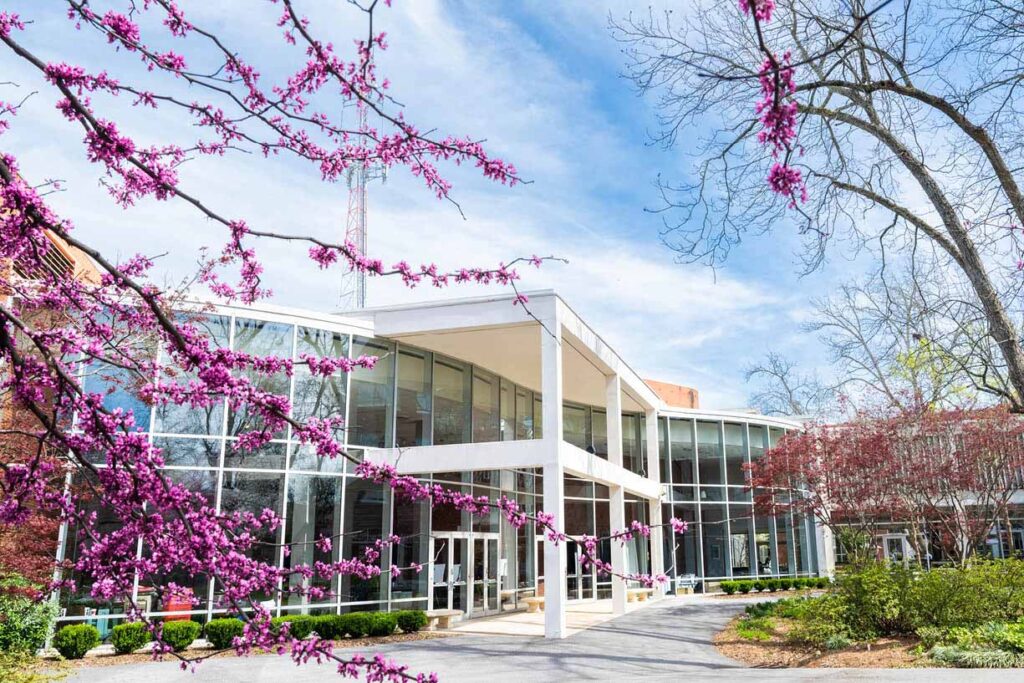
The joint PIDT + OTESSA-US Research and Design Symposium will be held in Athens, Georgia, at the Georgia Center for Continuing Education & Hotel on the University of Georgia campus, May 25 to 27, 2027.
Associated Publication
For those who choose to develop a manuscript for discussion at the Research and Design Symposium, we provide a streamlined path to publication as a service to symposium authors. Every paper presented at the research symposium will receive a desk review for the Journal of Applied Instructional Design (JAID) and for the Journal of Computing in Higher Education (JCHE). You do not need to submit your paper separately for either review.
Papers that pass desk review for JAID move into peer review. Select papers will be invited for publication in JCHE. That invitation is explicit and comes from the journal’s editors. Papers invited to JCHE must be situated in higher education, connect with the symposium theme and grand challenges, and make a significant scholarly or intellectual contribution.
Both journals treat the feedback you receive at the symposium as a first round of review and their own peer review process as a second. The process is shorter because participating in the symposium constitutes a rigorous review by itself. However, this does not guarantee acceptance. A paper is accepted only when it passes the criteria for acceptance at each of the respective journals.
Symposium Theme
Grand Challenges: Moving Towards Impact
Building on our first two years of the grand challenges initiative, we invite proposals that confront the persistent challenges facing our field directly, rather than proposals that merely describe or reframe them. We seek work that demonstrates commitment to meaningful change through collaborative effort and rigorous inquiry across contexts including K-12, higher education, workplace learning, and adult education.
We also want this call to reach further than people already inclined to write about grand challenges as a topic. We are especially interested in early-career scholars and colleagues whose work or perspective doesn’t typically get a hearing in our usual venues.
Image Credit: State Botanical Garden of Georgia
Associated Strands
1
Access & Design
How do design and co-design choices shape who participates in learning? We invite proposals that move beyond compliance-based approaches to accessibility and instead examine participatory, justice-oriented approaches to learning design. This strand welcomes work on:
- Participatory and co-design approaches that center marginalized voices
- Justice-oriented design frameworks
- Accessibility as a fundamental design principle rather than an afterthought
- How power dynamics shape access to learning opportunities
- Inclusive design across diverse learner populations and contexts
2
Ethics & Power
Who defines learning problems? Who determines outcomes? Where are accountability, care, and equity in LIDT practice, and why is the answer so often that they’re not there? This strand invites critical examination of values and power in our work:
- Ethics and power in instructional design practice
- Who gets to define learning problems and desired outcomes
- The role of accountability, care, and equity in LIDT
- Challenging the absence of ethical frameworks in everyday practice
- Justice-oriented approaches to defining and solving learning problems
3
Technology & Human Factors
How do emerging technologies, particularly artificial intelligence, mediate meaning, learning, identity, experience, and self-awareness? Why does our pedagogy not only lag behind technological change but often accept new technologies uncritically? This strand calls for leadership in confronting the field’s long-standing tendency toward technological boosterism and its lack of critical design approaches. We invite contributions that interrogate and reimagine the relationship between technology, pedagogy, and human experience, including:
- How AI and emerging technologies shape learning, identity, and human experience
- Critical examination of why pedagogy lags behind technological change
- The field’s responsibility to move toward critical, justice-oriented design
- Rethinking human factors in an age of pervasive AI and automation
- Developing critical design practices that resist default adoption narratives
4
Moving Towards Impact: Demonstrated Progress on Grand Challenges (new for 2027)
Much of our field’s engagement with big, shared problems stops at framing and planning. This strand is for work that has moved further: proposals that show what has changed as a result of the work, not what the work is merely about. This strand welcomes:
- Evidence of interdisciplinary collaboration formed around a shared challenge
- Methods or interventions that have been put into practice and evaluated, rather than only proposed
- Honest accounts of what it took to move a grand challenge forward, including what didn’t work
- Work that doesn’t fit strands one through three but demonstrates the same specificity, collaborative framing, and named SDG connection this call now asks of every proposal
Global Context and Sustainable Development Goals
We strongly encourage every paper proposal to identify at least one relevant United Nations Sustainable Development Goal and explain the substantive connection between the goal and the proposed work. Naming a goal is not sufficient. Authors should use the goal to clarify the broader problem, the communities or systems involved, or the contribution their work could make to international efforts. We will also make room in the agenda for a shared conversation about how the Sustainable Development Goals connect with grand challenges so that authors can carry that conversation back into their papers.
Ways to Participate
The gathering brings together World Café sessions focused on manuscript development and PIDT discussions and activities. You can participate in three interconnected ways, with all participants welcome to participate in any and all of these strands.
Join the conversations. Register when registration opens and participate in World Café sessions, PIDT discussions, and other activities. No proposal or paper is required. Advance reading is encouraged for World Café discussions but is not a condition of participation.
Lead a discussion. Propose a topic and facilitate a PIDT conversation. The proposal process will be brief and informal, with a separate invitation and instructions shared later. You do not need to develop a paper to lead a discussion.
Develop a manuscript. Submit a proposal for the World Café manuscript development process. Authors whose proposals are accepted will prepare a discussion paper of up to 2,500 words, read select papers in advance, and participate in World Café discussions of their own and others’ work. These conversations will support further manuscript development for submission to the associated journal special issues or sections.
Participants are encouraged to engage across these opportunities, contributing to manuscript discussions and exploring shared interests through PIDT activities.
Characteristics of Successful Proposals
To participate in the World Café manuscript development process, submit a Word document containing a title and a proposal of up to 500 words describing the paper you plan to develop. Explain the problem or question you will address, why it matters, and the contribution you hope to make. Indicate how discussion with other participants could help develop your ideas.
- Proposals may address research, practice, or policy. Work in progress is welcome, including emerging ideas that would benefit from discussion and feedback.
- The submission form will request only the following:
- Author name(s), institutional affiliation(s), and contact email.
- Indication that you are participating in the Georgia-US OTESSA conference
- Proposal title.
- Word document containing the proposal.
- Your 500-word proposal must include:
- Paper type: research, practice, other
- Problem framing: What is the problem and how are you framing it?
- Clear need or gap: Why does this problem matter and what gap exists?
- Your contribution: How does your research or practice contribute to addressing this problem?
- Collaborative potential: How might your work connect with others tackling similar challenges?
- Global context (strongly encouraged): identify the relevant UN Sustainable Development Goal(s) and explain the substantive relationship (see Global Context and Sustainable Development Goals above).
Proposals will be submitted through OTESSA’s submission system, where authors will receive feedback and notification of the decision
Roadmap to Publication
For those who wish to submit a manuscript, you will:
- Follow symposium presentation and discussion guidelines;
- Submit a 2,500-word draft by the deadline (late submissions may result in rescinded acceptance);
- Read and review approximately 10 draft papers (approximately 2,500 words each) from other presenters, available approximately two weeks before the symposium;
- Fully attend and actively participate in the symposium;
- Revise drafts, review others’ work, and submit the final draft by the deadline;
- Participate in the peer review process of the JAID or JCHE special issue; and
- Review proofs for publication.
Deadlines
This year, OTESSA-US will take place in Athens, GA, May 25-27. The following dates apply to this call. Submission details will be provided via email.
- Proposals due (submit OTESSA Session Proposal form through OTESSA submission site): Feb. 15, 2027
- Notifications of acceptance: March 15, 2027
- 2,500-word drafts due (submit via Google Forms): April 26, 2027
- On-site meeting dates: May 25-27
- Final paper submission (submit through JCHE site): October 4, 2027
Venue: Athens, Georgia
The joint PIDT + OTESSA-US Research and Design Symposium will be hosted at the Georgia Center for Continuing Education & Hotel on the University of Georgia campus in Athens. The Georgia Center offers 22 configurable conference rooms, ranging from small breakout spaces for 15 to 45 people up to larger rooms accommodating up to 182, along with in-house event coordination, audiovisual support, and menu planning. A hotel is attached to the conference center, and we plan to arrange a room block for attendees. As in past years, lodging will be booked independently of symposium registration.
Athens is home to the University of Georgia’s Georgia Museum of Art and the State Botanical Garden of Georgia, along with a well-known downtown dining and music scene. We plan to leave room in the schedule for attendees to explore Athens, either independently or as part of the conference.